
 Book tickets
 Sign up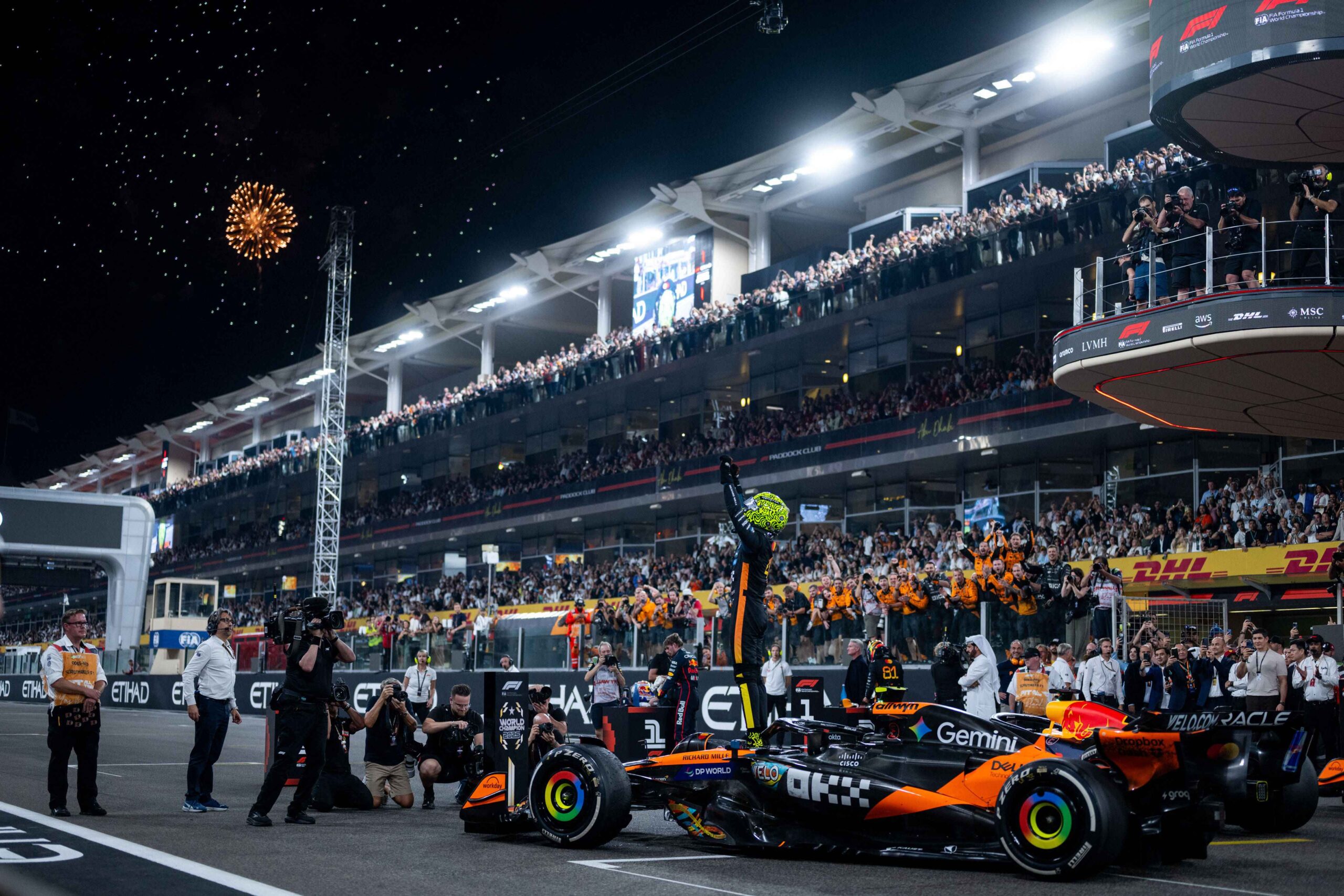
The 2026 F1 season marks a new era for the sport. One of the biggest regulation resets in years, combined with a new team, new cars, returning faces and a new race on the calendar means there is plenty to look forward to about the greatest show on Earth for the upcoming year.
If you’re planning to attend an F1 race this year, we have good news. Tickets for over 70% of races for the upcoming season are already on sale and proving as popular as ever. From Bahrain to Brazil and almost everywhere in between, we have availability to suit all budgets and preferences.
In this blog, we delve deep into the key talking points to look out for throughout the upcoming season. Off the back of a stunning title fight towards the end of 2025, this campaign will not be one to miss as the world’s greatest four-wheeled drivers battle for one of the biggest prizes in motorsport once again.
🎟️ Official 2026 F1 tickets
Updates to the Grid
Cadillac become the 11th team in Formula 1
One of the biggest talking points ahead of the season is the arrival of a brand-new team: American-based Cadillac. As the first independent constructor to join Formula 1 in nearly a decade, Cadillac enter the sport amid considerable hype, with expectations high for their debut season. Their addition brings the total number of drivers on the grid to 22 for the first time since 2016.
Cadillac have opted for experience at the wheel, signing fan-favourites Valtteri Bottas and Sergio Pérez – both returning to F1 after their departures at the end of the 2024 season – to lead the charge in their inaugural campaign.
Pérez’s return to the sport is sure to boost the popularity of the Mexican Grand Prix even further, with Checo adored by his home fans at the Autódromo Hermanos Rodríguez. Cadillac being American-based also ensures there will be huge excitement from the locals at all three US stops on the calendar.
Sauber transition into Audi
Elsewhere, Audi make their long-awaited F1 debut in 2026 as a factory team, taking over from Sauber. Supplying their own power unit, Audi continue their partnership with Nico Hulkenberg and Gabriel Bortoleto, who previously raced under the Sauber banner.
While Sauber were sponsored by betting company ‘Kick’, Audi have opted for a different route and will be partnered with the world-recognised bank, Revolut.
When it comes to their staff, Audi have opted for experience, maintaining the experienced Jonathan Wheatley as their Team Principal. Wheatley previously held positions at Red Bull as both the Sporting Director and Team Manager, and his role included supervising a pit crew widely regarded as one of the best in F1.
The sole rookie of 2026
The F1 driver lineup sees just one other change beyond the Cadillac entries. Red Bull Junior Driver and youngest-ever F2 race winner, Arvid Lindblad, earns a seat at Racing Bulls, stepping up to F1’s top tier to race alongside Liam Lawson. This move allows Isack Hadjar to join Max Verstappen at Red Bull in only his second Formula 1 season, while Yuki Tsunoda drops to a reserve role, marking the first time he will be without a race seat since his F1 debut in 2021.
Lindblad heads to the top step as a highly-rated young prospect, with an impressive junior racing career behind him. Born in Virginia Water, Surrey, F1’s sole rookie of 2026 becomes the fifth British driver on the grid as he joins George Russell, Lando Norris, Lewis Hamilton and Ollie Bearman.
Should everything go to plan, Lindblad is set to become the fourth-youngest driver in history to make his F1 debut.
New Regulations
The talk of the Paddock. In the 2026 F1 season, the sport faces the biggest overhaul of regulations seen in over a decade.
Revised Aerodynamic Package
As a result of the newly introduced regulations, all cars are set to become shorter, lighter, narrower, and more agile. Cornering responsiveness should improve thanks to a reduced wheelbase, while the 18-inch Pirelli tyres will also become narrower. Although retaining their 18-inch diameter, the reduced tyre width is expected to cut drag and lower overall weight. The small wheel arches traditionally positioned above the tyres have also been removed, further contributing to cleaner airflow and weight reduction.
The 2026 cars will feature flatter floors than those seen in the previous regulation cycle (2022-2025), alongside extended diffusers with larger openings. This combination will generate less downforce and require a higher ride height, ultimately encouraging a wider range of set-up options across the grid. In theory, this should suit a broader spectrum of driving styles and help level the competitive playing field.
From the upcoming campaign, F1 cars will also run simpler front and rear wings. Rear wing beam elements have been removed entirely, while the front wing adopts narrower components. Notably, the outer section of the front wing remains an area with scope for development, and is expected to become a key battleground as teams look to maximise overall aerodynamic performance.
Active Aero
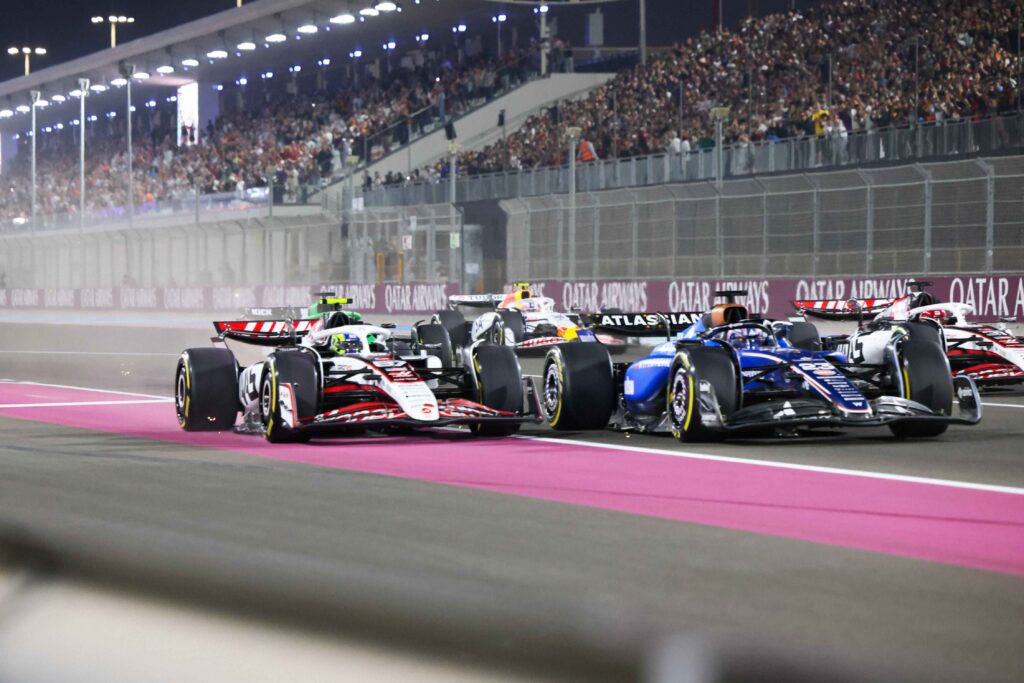
In what will be the most recognisable change to the average F1 fan, DRS has been replaced by a new system named ‘Active Aero’. This enables the cars to adjust the angle of both their front and rear wing elements depending on which part of the track they are tackling.
In corners, the flaps will stay shut to maximise grip. On designated straights at each circuit, drivers will be able to activate low-drag mode which opens the flaps and flattens the wings, ultimately increasing the scope for the car to hit top speed. These features are available to every driver on every lap, without the need to be within one second of the driver in front like it was when DRS was in use.
Despite this change, being within one second of a competitor does bring prospects for drivers with the introduction of ‘Overtake Mode’. This is a mode that is for attack only and is triggered when they’re within one second of the car in front. Overtake Mode gives the cars access to extra electrical energy, enabling them to overtake or pressure their rival at a single detection point.
Alongside Active Aero and Overtake Mode, drivers will also have greater control over energy deployment and recovery. The newly renamed ‘Boost’ button can be used anywhere on the lap for both attacking and defending, provided sufficient battery charge is available, while drivers and engineers can actively manage battery recharge modes during the race – adding another tactical layer to wheel-to-wheel combat.
Power Unit Changes
Under the 2026 regulations, Formula 1 will continue to use 1.6-litre V6 turbo hybrid power units, but with a major shift in emphasis. The internal combustion engine output has been reduced while the electric motor’s contribution has been significantly increased, resulting in an approximate 50-50 split between petrol and electric power. This move improves road relevance and has helped attract and retain manufacturers including Ferrari, Mercedes, Audi, Red Bull Power Trains (with Ford), Honda, and General Motors from 2029.
The new power units present a fresh challenge for engineers, with the Energy Recovery System now capable of harvesting roughly twice as much energy per lap through braking and throttle lift. This increased electrical demand has led to the removal of the complex and costly MGU-H, a system that offered limited road relevance and added weight, simplifying the overall power unit architecture.
Fuel also plays a key role in the new era. For the first time in F1 history, cars will run on Advanced Sustainable Fuels, following successful trials in F2 and F3 during 2025. Produced using sources such as carbon capture, municipal waste, and non-food biomass, the fuel is independently certified to meet strict sustainability standards while maintaining performance.
The new home of the Spanish Grand Prix
In the latest calendar shake-up, Madrid returns to Formula 1 as the first new race to be added since the Las Vegas Grand Prix made its debut in 2022. Spain’s capital takes over the Spanish Grand Prix title from Barcelona, although the Circuit de Barcelona-Catalunya remains on the schedule under its new name, the Barcelona-Catalunya Grand Prix. Though yet to be officially confirmed, the circuit has reportedly secured a renewal agreement that will see it run on a biennial basis, alternating its calendar slot with Spa-Francorchamps for the Belgian Grand Prix, with races scheduled for 2028, 2030, and 2032.
The Spanish Grand Prix in Madrid will take at the new Madring Circuit, with the last F1 race in this city taking place at the Circuito del Jarama in 1981. The Madring Circuit, located near the airport in the Valdebebas district of Spain’s capital, is a hybrid street-permanent circuit featuring a distinctive, steeply banked “Monumental” corner inspired by Las Ventas, designed to deliver high-speed racing, increased overtaking opportunities, and an improved fan experience through modern facilities and a strong focus on sustainability.
New Sprint Race venues
Sprint racing returns in 2026 with six high-intensity weekends spread across the season, blending familiar favourites with exciting new hosts. Shanghai and Miami continue as Sprint venues for the third year running, while Silverstone makes a long-awaited return to the format for the first time since its inaugural Sprint in 2021.
Adding fresh intrigue, Montreal, Zandvoort, and Singapore will host Sprint races for the very first time, bringing dynamic new locations and atmospheres to Saturday’s action before the Grand Prix on Sunday – ensuring the Sprint remains one of the most thrilling elements on the modern F1 calendar.
Buy 2026 F1 tickets today
With a bold new technical era, fresh faces on the grid, and an evolving calendar featuring new venues and formats, the 2026 Formula 1 season is shaping up to be one of the most exciting in the sport’s history. Whether it’s witnessing cutting-edge cars in action, experiencing Sprint race weekends, or seeing iconic circuits and brand-new locations come alive, there’s never been a better time to be trackside.
Tickets for the 2026 season are already in high demand, so secure yours early and be part of a landmark year that promises unforgettable racing from lights out to the chequered flag.
